How to Accept UPI Payments on Your Website Without a Traditional Payment Gateway
UPI has become one of the most convenient ways for Indian customers to make online payments. Whether you run an e-commerce store, SaaS platform, service business, digital platform, or mobile application, providing a smooth UPI payment experience can make it easier for customers to complete transactions.
Traditionally, businesses have relied on payment gateways to accept online payments. However, not every business wants to depend entirely on a traditional gateway. Some businesses already have a merchant UPI ID or QR code and simply need technology that can connect their existing merchant account with their website or application and automate payment verification.
This is where smart merchant infrastructure can help.
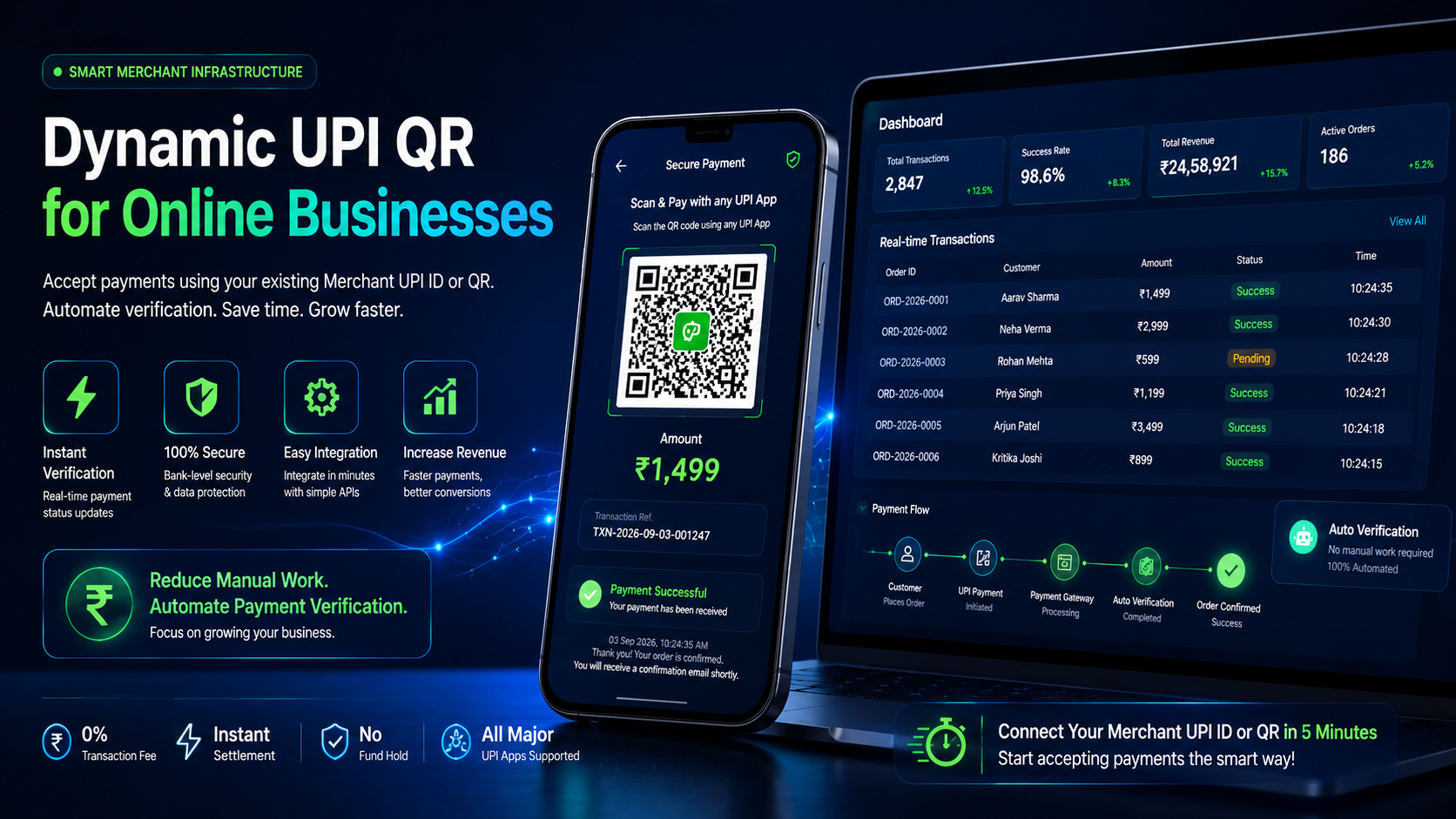
With a technology solution such as JaduPe, businesses can connect their existing merchant UPI ID or QR code with payment automation technology, helping reduce manual verification and create a faster payment experience.
What Does “UPI Payment Without a Traditional Gateway” Mean?
When people search for UPI payment without gateway, they often mean accepting payments through their existing merchant UPI account instead of creating an entirely new payment collection setup through a conventional payment gateway.
A typical setup can involve:
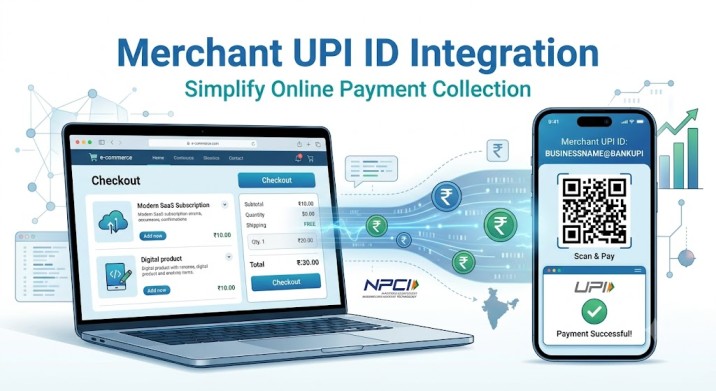
Customer → Website/App → UPI Payment → Merchant UPI Account → Payment Verification → Order/Service Confirmation
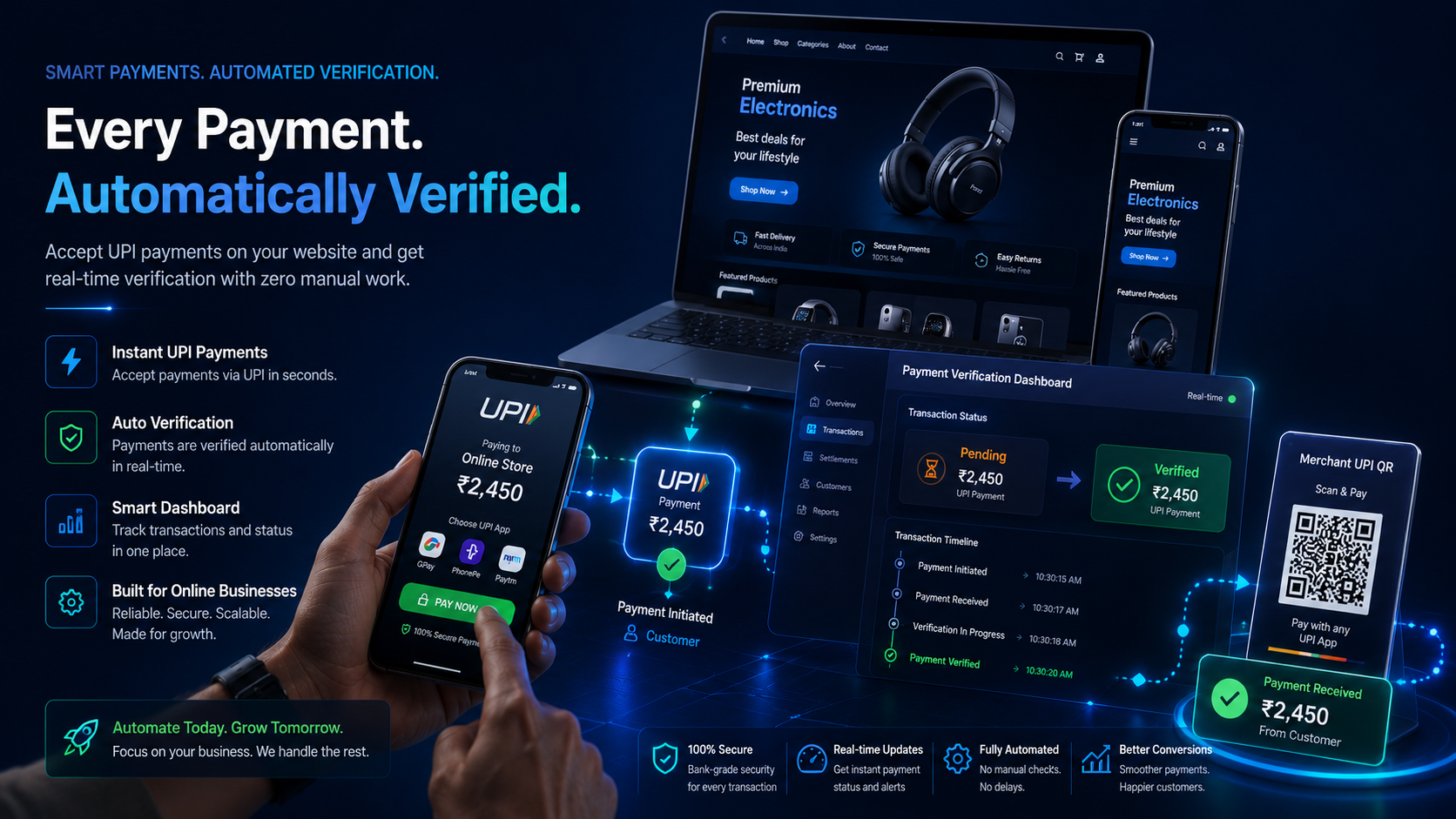
Instead of manually checking whether a customer has completed a payment, payment automation technology can help businesses streamline the verification process and update the transaction status on their website or application.
The important point is that the business uses its own merchant UPI account, while the technology layer helps automate the payment workflow.
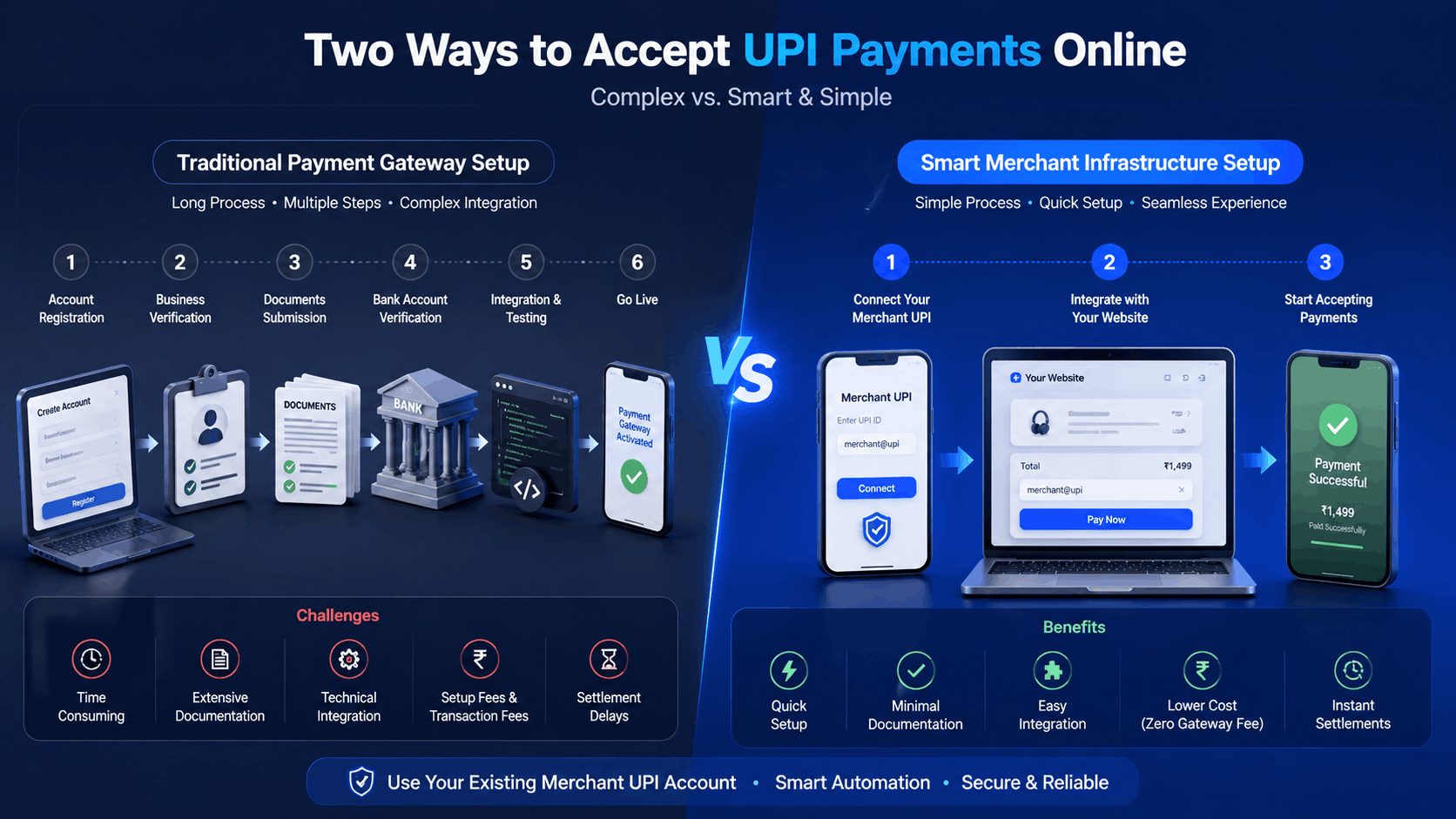
How to Accept UPI Payments Online
There are several components involved in creating a smooth UPI payment experience on a website.
1. Use a Merchant UPI Account
The first requirement is an appropriate merchant UPI ID or QR code for receiving business payments.
Your existing merchant UPI setup can be connected to your website's payment workflow.
2. Generate a Payment Request
When a customer reaches the checkout page, your website can generate the required payment information based on the order amount.
For example:
Order Amount: ₹1,499
Payment Method: UPI
Merchant Account: Business UPI ID
The customer can then proceed with the payment using their preferred UPI application.
3. Offer UPI Intent or QR Payment
A modern website can provide customers with convenient payment options such as:
- UPI Intent
- Dynamic QR
- UPI payment link
- QR scanning from another device
This allows customers to choose the payment method that works best for them.
4. Automate Payment Verification
Payment verification is one of the most important parts of an online payment workflow.
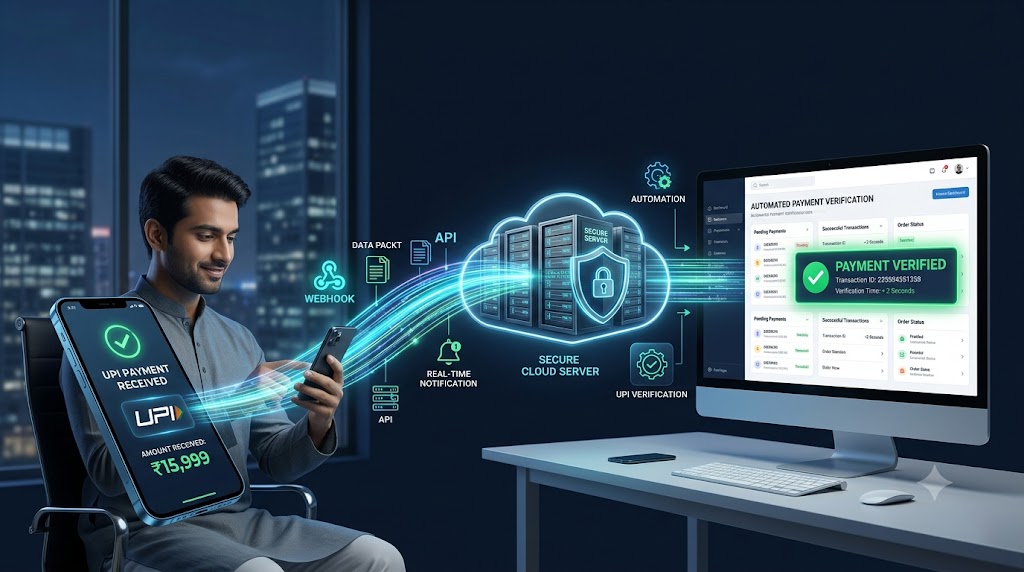
Instead of asking customers to manually send screenshots or waiting for someone to check a transaction, payment automation technology can help verify the payment status and communicate the result to the website.
For example:
Payment Initiated → Payment Completed → Verification → Order Status Updated
This can significantly reduce manual work for businesses.
Why Businesses Are Looking Beyond Traditional Payment Gateways
Traditional payment gateways can be useful for businesses that need a broad range of payment methods and payment infrastructure.
However, some businesses may already have merchant accounts and may only need a technology layer for payment automation.
Common requirements include:
- Connecting an existing merchant UPI account
- Creating payment requests
- Generating QR-based payment flows
- Supporting UPI Intent
- Automating payment verification
- Updating transaction status
- Reducing manual payment checking
- Integrating payments into an existing website or application
For such use cases, UPI payment automation technology can be an alternative approach to consider.
What Is Smart Merchant Infrastructure?
Smart merchant infrastructure is a technology layer designed to help online businesses connect their existing merchant payment setup with their digital platforms.
Instead of replacing the merchant's existing UPI account, the infrastructure can work around the business's existing merchant setup and automate parts of the payment workflow.
For example:
Existing Merchant UPI ID / QR
↓
Smart Payment Infrastructure
↓
Website / Mobile App
↓
Payment Request
↓
Payment Verification
↓
Order Confirmation
This approach can help businesses create a more automated payment experience without rebuilding their entire website or application.
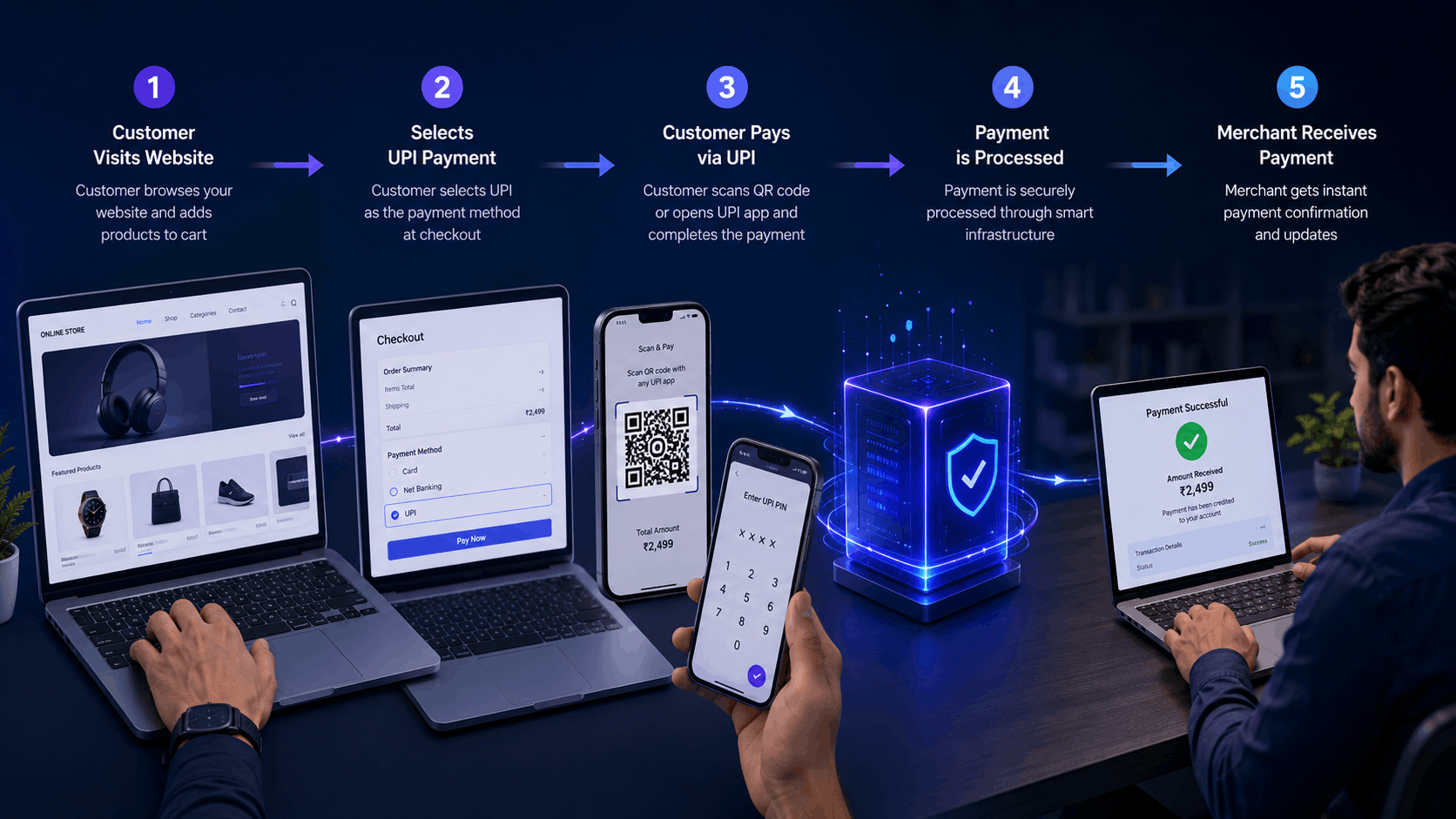
How JaduPe Helps Businesses Accept UPI Payments
JaduPe is a Smart Merchant Infrastructure for Online Businesses.
It helps businesses connect their existing Merchant UPI ID or QR Code with smart payment automation technology.
The objective is simple:
Automate payment verification, reduce manual work, and deliver a faster payment experience on your website or app.
With a suitable integration, businesses can build payment flows around features such as:
UPI Intent
Customers can initiate a UPI payment directly through supported UPI applications, making the checkout experience faster on compatible devices.
Custom/Dynamic QR
Businesses can use QR-based payment experiences so customers can scan and complete their payments using their preferred UPI application.
Payment Links
Payment links can provide another convenient way to request payments from customers.
Payment Verification
Automated verification can reduce the need for businesses to manually check every transaction.
Webhooks
Webhook-based communication can help your website or application receive transaction-related updates and trigger the appropriate workflow.
Website & App Integration
The payment infrastructure can be connected with an existing website or application to create a more streamlined checkout experience.

Example: UPI Payment Flow on an E-Commerce Website
Imagine that a customer purchases a product worth ₹2,000.
The payment flow could look like this:
Step 1: Customer Places an Order
The customer selects a product and proceeds to checkout.
Step 2: Customer Selects UPI
The website displays the available UPI payment option.
Step 3: Payment Information Is Generated
The system generates the payment request for the exact order amount.
Step 4: Customer Completes Payment
The customer pays through a supported UPI application or QR code.
Step 5: Payment Is Verified
The payment automation system checks the transaction status.
Step 6: Website Updates the Order
Once the payment is successfully verified, the website can automatically update the order status.
Customer Payment → Automated Verification → Order Confirmation
This removes unnecessary manual steps from the payment process.
Benefits of Accepting UPI Payments Online
1. Faster Checkout
UPI is already familiar to millions of Indian customers, making it a convenient payment option.
2. Reduced Manual Work
Automated verification can reduce the need to manually check payment screenshots or transaction details.
3. Better Customer Experience
Customers can complete payments using familiar UPI applications and payment methods.
4. Easy Payment Tracking
A structured payment workflow can make it easier for businesses to monitor transactions.
5. Website Automation
Payment status can be connected with order, subscription, booking, or service workflows.
6. Existing Merchant Account
Businesses can build their payment workflow around their existing merchant UPI setup rather than changing the account used for receiving payments.
UPI Payment Without Gateway vs Traditional Payment Gateway
| Feature | Traditional Payment Gateway | Smart Merchant Infrastructure |
|---|---|---|
| Existing Merchant UPI | Depends on setup | Can be connected |
| UPI Payment | Yes | Yes |
| UPI QR | Supported depending on provider | Supported |
| UPI Intent | Supported depending on provider | Supported |
| Payment Automation | Yes | Yes |
| Automated Verification | Yes | Yes |
| Existing Merchant Setup | Provider-dependent | Designed around existing merchant setup |
| Website Integration | Yes | Yes |
| App Integration | Yes | Yes |
The right option depends on your business model, compliance requirements, payment methods, and technical requirements.
Who Can Use UPI Payment Automation?
UPI payment automation can be useful for different types of online businesses, including:
- E-commerce websites
- SaaS platforms
- Subscription businesses
- Service businesses
- Educational platforms
- Booking platforms
- Digital product businesses
- Mobile applications
- Online marketplaces
- Business websites
If your business already has a merchant UPI setup and wants to create a more automated online payment workflow, smart merchant infrastructure may be worth considering.
What Do You Need to Integrate UPI Payments?
Before starting an integration, businesses generally need:
- A website or mobile application
- An appropriate merchant UPI account
- Merchant UPI ID or QR
- Payment automation infrastructure
- API/integration access
- A backend capable of handling payment status
- Secure transaction processing and verification logic
Your development team can then connect the payment workflow with your website's checkout and order-management system.
Why Payment Verification Matters
Simply displaying a UPI QR code is not enough for a fully automated online payment experience.
Consider an online store where a customer pays ₹999.
If the system cannot automatically determine whether the payment was successful, the business may need to manually verify the transaction before processing the order.
That can create delays.
An automated workflow can instead follow:
Order Created → Payment Requested → Payment Received → Payment Verified → Order Confirmed
This can make the process faster for both the customer and the business.
Is UPI Payment Without a Traditional Gateway Right for Your Business?
It depends on your requirements.
If you need multiple payment methods, cards, international payments, recurring billing, and other gateway features, a conventional payment gateway may be more suitable.
However, if your primary requirement is to connect your existing merchant UPI setup with your website or app and automate payment-related workflows, a smart merchant infrastructure solution can provide a focused approach.
Final Thoughts
Accepting UPI payments online doesn't necessarily mean that every business needs to completely replace its existing merchant setup.
Businesses with an existing merchant UPI ID or QR can explore technology solutions that connect their merchant infrastructure with their website or application and automate important parts of the payment workflow.
JaduPe is built around this concept — helping online businesses connect their existing merchant UPI setup with smart payment automation technology.
From UPI Intent and QR payments to payment verification and webhook-based automation, the goal is to create a smoother and more efficient payment experience for businesses and their customers.
Want to automate UPI payments on your website or app? Explore JaduPe and see how smart merchant infrastructure can fit into your existing payment workflow.