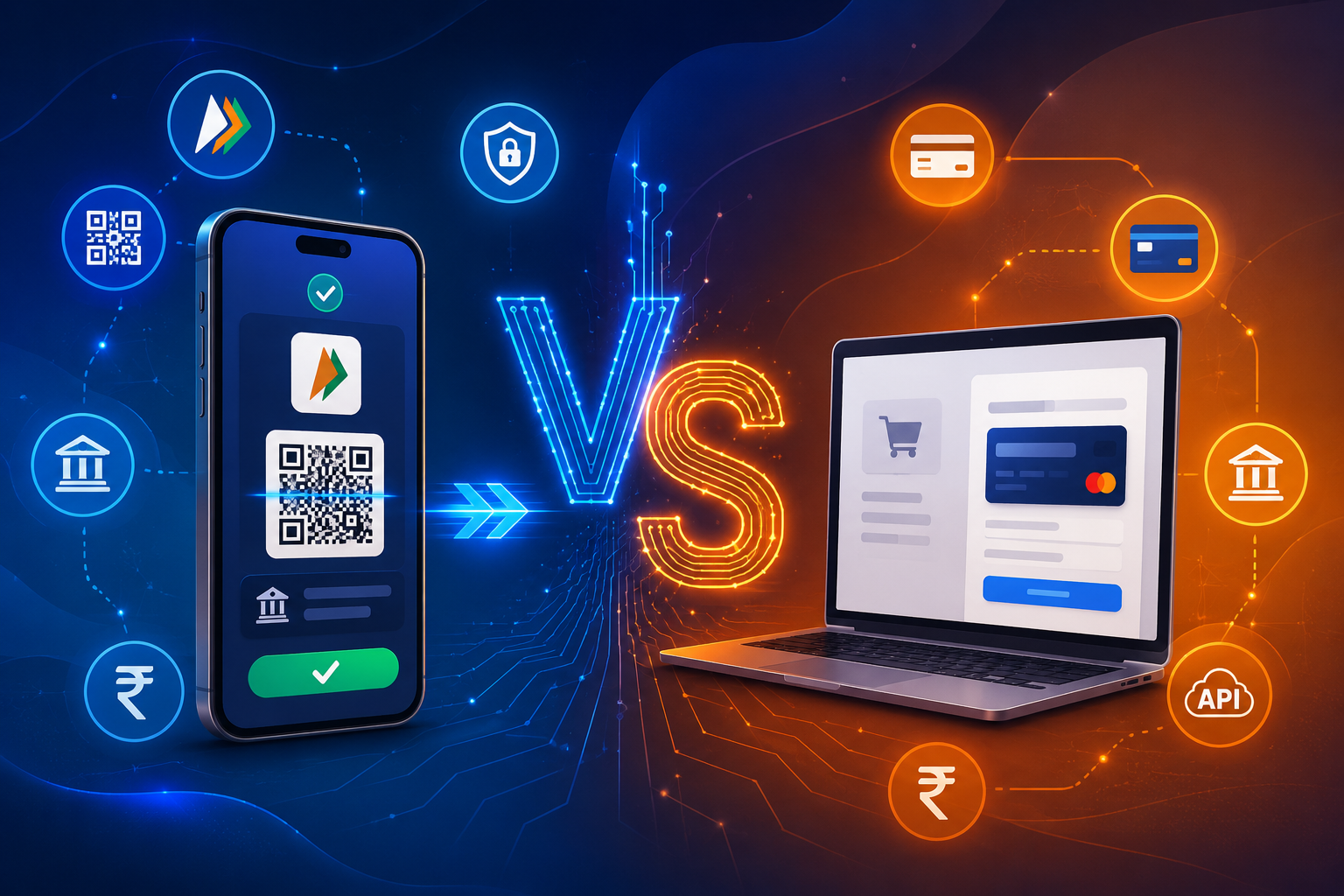
UPI Gateway vs Payment Gateway: The Real Difference Every Indian Business Should Know
If you're running a business in India and trying to figure out how to accept online payments, chances are you've come across two terms again and again — UPI Gateway and Payment Gateway. A lot of business owners assume they're the same thing, but honestly, they're quite different in how they work, what they cost, and who they're actually best suited for.
In this blog, we'll break down the real differences so you can decide what actually makes sense for your business — instead of just going with whatever your competitor is using.
What Is a Payment Gateway?
A payment gateway is a technology layer that sits between your customer, your business, and the bank. When someone pays on your website or app using a card, net banking, wallet, or UPI, the payment gateway securely processes that transaction and ensures the money reaches your account.
Traditional payment gateways support multiple payment methods together — credit cards, debit cards, net banking, wallets, and UPI, all under one roof. This is great if your customer base is diverse and you want to offer as many payment options as possible.
What Is a UPI Gateway?
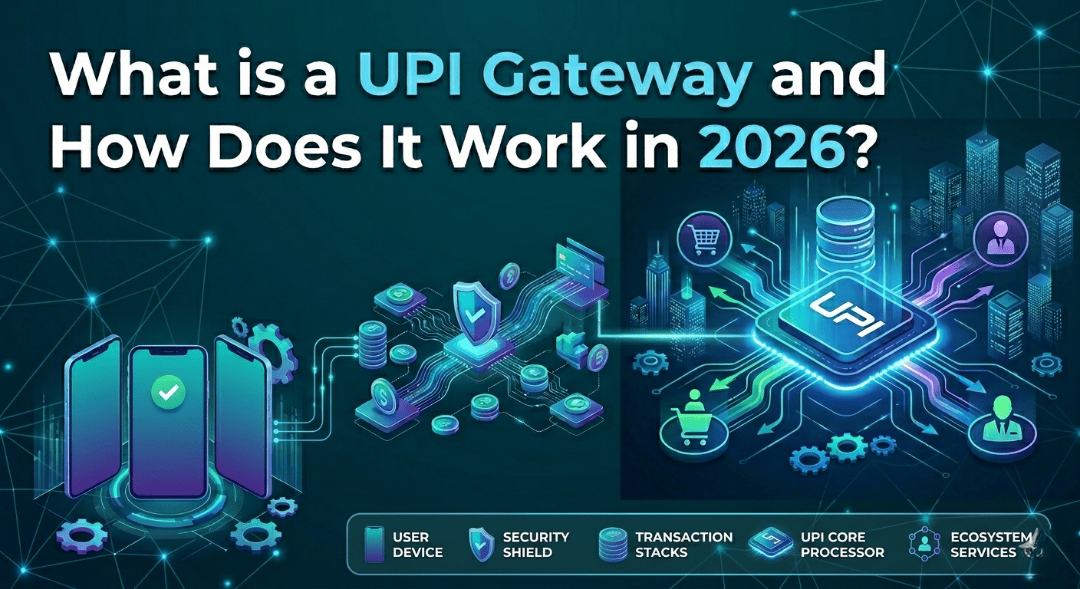
A UPI gateway, on the other hand, is more focused. It's built specifically around UPI transactions — meaning customers pay using apps like Google Pay, PhonePe, Paytm, or any BHIM-UPI enabled app. Instead of supporting a dozen different payment methods, a UPI gateway does one thing and does it really well: fast, direct, bank-to-bank UPI payments.
Given how popular UPI has become in India — genuinely the default way most people pay now, even for small transactions — a dedicated UPI gateway makes a lot of sense for businesses whose customers are mostly paying through UPI anyway.
Key Differences Between UPI Gateway and Payment Gateway
1. Transaction Fees
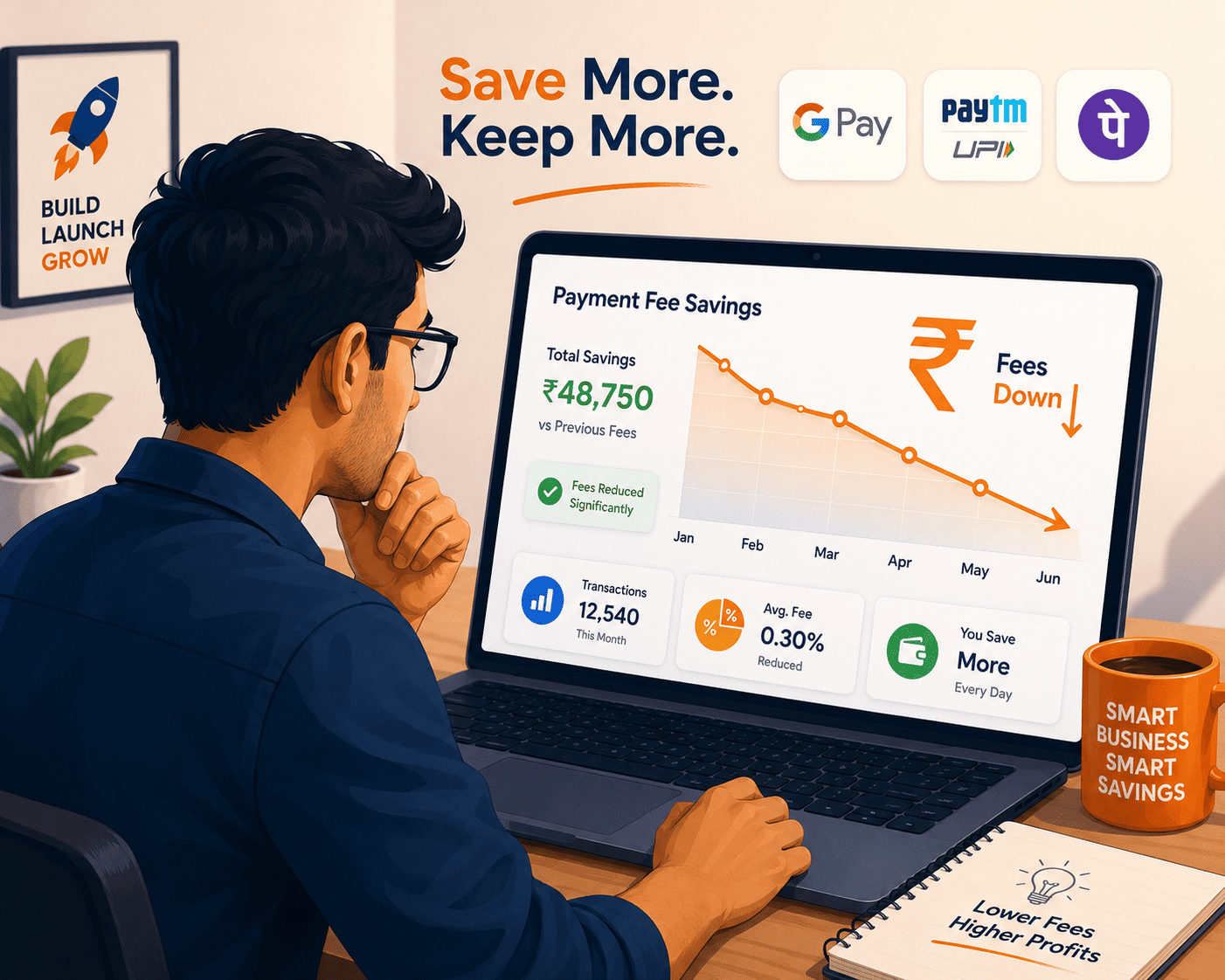
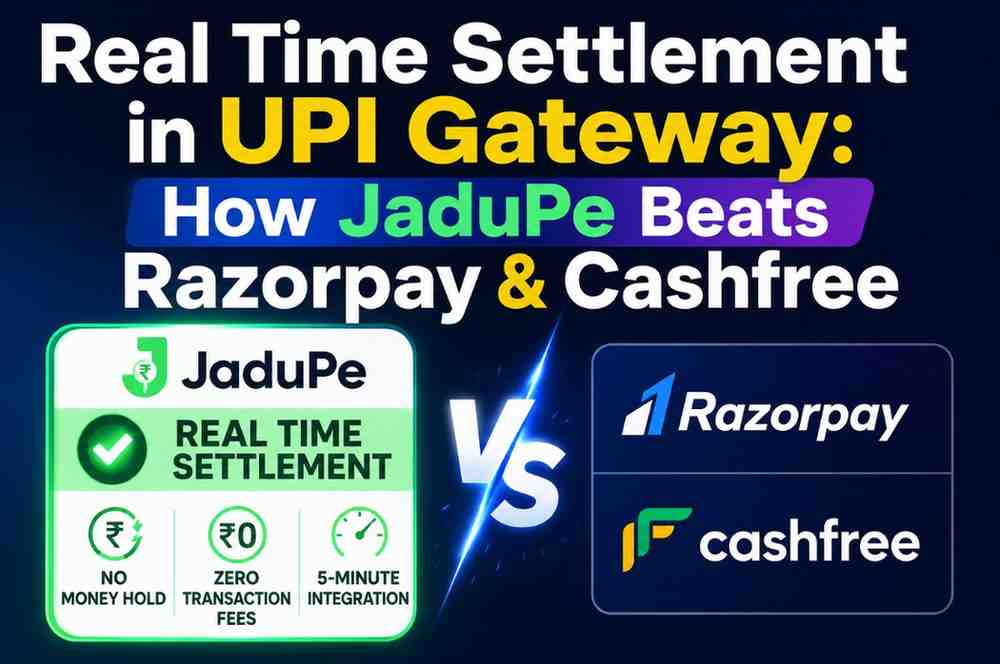
This is usually the biggest deciding factor for most businesses. Traditional payment gateways often charge a percentage-based fee (MDR) on every transaction, which can add up fast, especially for high-volume businesses. UPI transactions, because of how the UPI network is structured in India, can be offered at a much lower cost — and platforms like JaduPe take this further by offering UPI payments with zero transaction fees, a massive advantage if you're running on tight margins.
2. Settlement Speed
Regular payment gateways sometimes hold funds for a day or two before settling to your account, depending on the provider and payment method used. UPI gateways generally offer faster, often real-time settlement, since UPI itself is designed for instant bank-to-bank transfers. With JaduPe specifically, there's no money hold — funds move directly to your linked account with clear real-time visibility.
3. Integration Complexity
Traditional payment gateways, because they support so many payment methods, sometimes require more complex integration and documentation to get fully set up. UPI-focused gateways tend to be lighter and faster to integrate since the scope is narrower. JaduPe, for example, is built for quick, developer-friendly API integration, so businesses can go live within minutes instead of days.
4. Documentation & Onboarding
This is another area where UPI gateways often have an edge. Since UPI transactions can work off your existing UPI setup, the onboarding process tends to require less paperwork compared to a full multi-method payment gateway, which usually needs more extensive KYC and compliance documentation upfront.
5. Customer Payment Experience
For Indian customers specifically, UPI has become second nature — scan a QR code or tap an intent link, enter your UPI PIN, done. A UPI gateway leans fully into this familiar experience. Payment gateways offer more variety (which some customers still need, like card payments), but for a huge chunk of Indian users, UPI is simply the preferred and fastest option.
Which One Should Your Business Choose?
Honestly, it depends on your business model.
Go with a UPI Gateway if:
- Most of your customers already prefer paying via UPI apps
- You want lower or zero transaction fees
- You need fast, real-time settlement without holds
- You want quick integration without heavy paperwork
- Your business is a SaaS platform, e-commerce store, NGO, food delivery app, or similar where UPI is already the dominant payment method
Go with a Traditional Payment Gateway if:
- A significant portion of your customers use cards or international payment methods
- Your business needs multi-currency support
- You require very advanced, enterprise-level reporting across all payment types
For a lot of Indian businesses though — especially smaller and mid-sized ones, SaaS platforms, NGOs, and app-based businesses — a dedicated UPI gateway like JaduPe ends up being the more practical and cost-effective choice, simply because UPI already covers most of what their customers are using anyway.
Why Businesses Are Moving Towards UPI-First Gateways in 2026
More and more Indian businesses are realizing they don't necessarily need a heavy, multi-method payment gateway if UPI already covers 80–90% of their transaction volume. Why pay higher fees and deal with complex integrations for payment methods your customers barely use?
This is exactly the gap JaduPe is built to fill — a UPI gateway that's focused, fast, and doesn't add unnecessary cost or complexity to your checkout flow. With zero transaction fees, real-time settlement, and integration that can genuinely be done in minutes, it's built around what Indian businesses actually need in 2026, rather than trying to be everything for everyone.
Final Thoughts
Both UPI gateways and traditional payment gateways have their place, but for most Indian businesses today, UPI is already the payment method of choice for the majority of customers. Choosing a gateway built specifically around UPI — with lower costs, faster settlement, and simpler integration — often ends up being the smarter move, rather than paying for features you don't really need.
If you're looking to accept UPI payments on your website, app, or software platform without the usual transaction fees and settlement delays, JaduPe is built exactly for that.
Get started with JaduPe or reach out on WhatsApp to see how it fits your business.
Frequently Asked Questions
Q1. Is a UPI gateway safer than a regular payment gateway? Both are secure when built properly, since UPI itself operates on a highly secure, RBI-regulated network (NPCI). The key difference is really about focus and cost, not safety.
Q2. Can I use a UPI gateway alongside a traditional payment gateway? Yes, many businesses use a UPI-focused gateway like JaduPe for their primary UPI traffic while keeping a broader gateway for card or international payments, depending on their customer base.
Q3. Do UPI gateways work for mobile apps as well as websites? Yes, UPI gateways like JaduPe are built to integrate with websites, mobile apps, and even backend software systems through simple APIs.
Q4. Why do UPI transactions usually have lower or zero fees compared to cards? This comes down to how the UPI network is structured in India, which allows for direct bank-to-bank transfers without the additional processing layers that card networks typically involve.
Q5. How long does it take to integrate a UPI gateway like JaduPe? Integration is designed to be fast — most businesses can get up and running with basic UPI QR and intent-based payments within minutes using the available APIs.